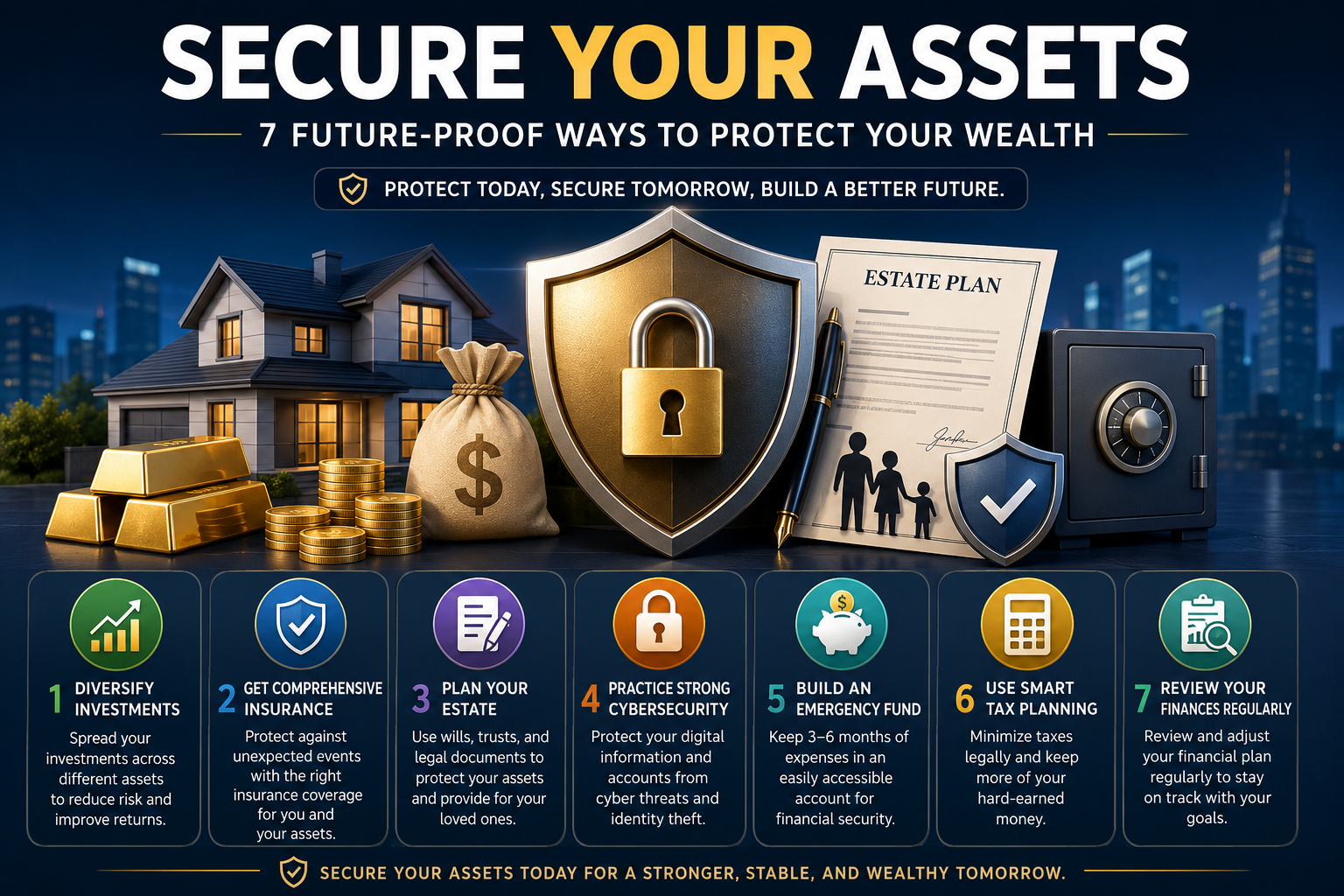
Secure Your Assets is one of the smartest financial goals you can pursue in today’s rapidly changing world. Economic uncertainty, cyber threats, inflation, legal risks, and unexpected emergencies make protecting your wealth more important than ever. Whether you’re building your first investment portfolio or managing a lifetime of savings, learning how to Secure Your Assets can help preserve your financial future.
Financial security isn’t about avoiding every risk—it’s about preparing for them wisely. A future-proof financial strategy combines diversified investments, insurance, emergency planning, cybersecurity, estate planning, and regular financial reviews to minimize losses and maximize long-term growth.
This guide explores 7 future-proof ways to Secure Your Assets, providing practical steps that individuals, families, and business owners can implement today.
Why It Is Important to Secure Your Assets
To Secure Your Assets means protecting everything you’ve worked hard to build. Assets include:
- Cash savings
- Investment portfolios
- Retirement accounts
- Real estate
- Vehicles
- Business ownership
- Intellectual property
- Digital assets
- Valuable collectibles
Without proper protection, unexpected events can significantly reduce your wealth. Inflation, lawsuits, cybercrime, market downturns, and health emergencies can all threaten financial stability. Fortunately, proactive planning helps minimize these risks.
Table of Contents
1. Secure Your Assets by Building a Diversified Investment Portfolio
Diversification is one of the strongest principles of wealth protection.
Never place all of your money into a single investment. Instead, spread investments across different asset classes, industries, and geographic regions.
A diversified portfolio may include:
- Stocks
- Bonds
- Mutual funds
- ETFs
- Real estate
- Precious metals
- Cash equivalents
Diversification reduces volatility because poor performance in one investment may be balanced by gains in another.
Benefits
- Lower investment risk
- Stable long-term growth
- Better inflation protection
- Increased financial resilience
A diversified portfolio is one of the easiest ways to Secure Your Assets against market uncertainty.
2. Secure Your Assets with Comprehensive Insurance Coverage
Insurance acts as a financial safety net.
Without adequate insurance, a single accident or disaster could wipe out years of savings.
Essential insurance includes:
- Health insurance
- Life insurance
- Homeowners insurance
- Auto insurance
- Disability insurance
- Business insurance
- Liability insurance
Insurance transfers financial risk to an insurer, protecting your wealth from unexpected losses.
Review Policies Annually
Many people purchase insurance and never update it.
Review your policies every year to ensure they still meet your current needs and asset values.
Proper insurance remains one of the most effective methods to Secure Your Assets throughout every stage of life.
3. Secure Your Assets Through Estate Planning
Estate planning ensures your assets are distributed according to your wishes.
Without proper documentation, legal complications can delay asset transfers and increase taxes or court costs.
Essential estate planning documents include:
- A legally valid will
- Trusts
- Power of attorney
- Healthcare directives
- Beneficiary designations
Estate planning also protects your family by reducing confusion during difficult times.
Benefits of Estate Planning
- Protects family wealth
- Avoids unnecessary probate delays
- Reduces legal disputes
- Helps minimize taxes
- Provides peace of mind
Estate planning is an essential strategy to Secure Your Assets for future generations.
4. Secure Your Assets Using Strong Cybersecurity Practices
Modern wealth extends beyond physical property.
Bank accounts, investment platforms, cryptocurrency wallets, cloud storage, and financial records all exist online.
Cybercriminals constantly target personal financial information.
Protect yourself by:
- Using strong passwords
- Enabling two-factor authentication
- Updating software regularly
- Avoiding suspicious emails
- Encrypting sensitive files
- Backing up important documents
Protecting your digital identity is another critical way to Secure Your Assets in today’s digital economy.
5. Secure Your Assets by Creating a Strong Emergency Fund
Life is unpredictable.
Medical emergencies, job loss, economic downturns, or unexpected repairs can create financial stress.
An emergency fund prevents you from selling investments or accumulating expensive debt during difficult times.
Financial experts generally recommend saving three to six months of living expenses in an easily accessible account.
Emergency Fund Benefits
- Covers unexpected expenses
- Prevents unnecessary borrowing
- Reduces financial anxiety
- Protects long-term investments
- Improves financial stability
Building a healthy emergency fund is one of the smartest ways to Secure Your Assets and maintain peace of mind.
6. Secure Your Assets with Smart Tax Planning
Taxes can significantly impact long-term wealth if not managed effectively.
Smart tax planning helps preserve more of your income and investment returns by using legal strategies such as tax-advantaged accounts, retirement contributions, charitable giving, and capital gains planning.
Review your tax situation annually and consider consulting a qualified tax professional to identify opportunities for savings.
Benefits of Tax Planning
- Reduces unnecessary tax liabilities
- Maximizes investment growth
- Improves cash flow
- Supports retirement planning
- Protects accumulated wealth
Thoughtful tax planning is another effective way to Secure Your Assets while building long-term financial security.
7. Secure Your Assets Through Regular Financial Reviews
Financial goals, markets, and personal circumstances change over time. Reviewing your financial plan at least once a year helps ensure your strategies remain aligned with your objectives.
During your review, evaluate:
- Investment performance
- Insurance coverage
- Emergency savings
- Debt levels
- Estate planning documents
- Retirement contributions
- Financial goals
Regular reviews allow you to make timely adjustments and continue to Secure Your Assets as your life evolves.
Final Thoughts
Learning how to Secure Your Assets is one of the most valuable investments you can make in your future. By diversifying your investments, maintaining proper insurance, planning your estate, strengthening cybersecurity, building an emergency fund, practicing smart tax planning, and reviewing your finances regularly, you can create a resilient financial foundation.
No strategy can eliminate every risk, but a proactive approach greatly increases your ability to protect your wealth and achieve long-term financial confidence. Start implementing these future-proof practices today, and your assets will be better positioned to withstand life’s uncertainties.