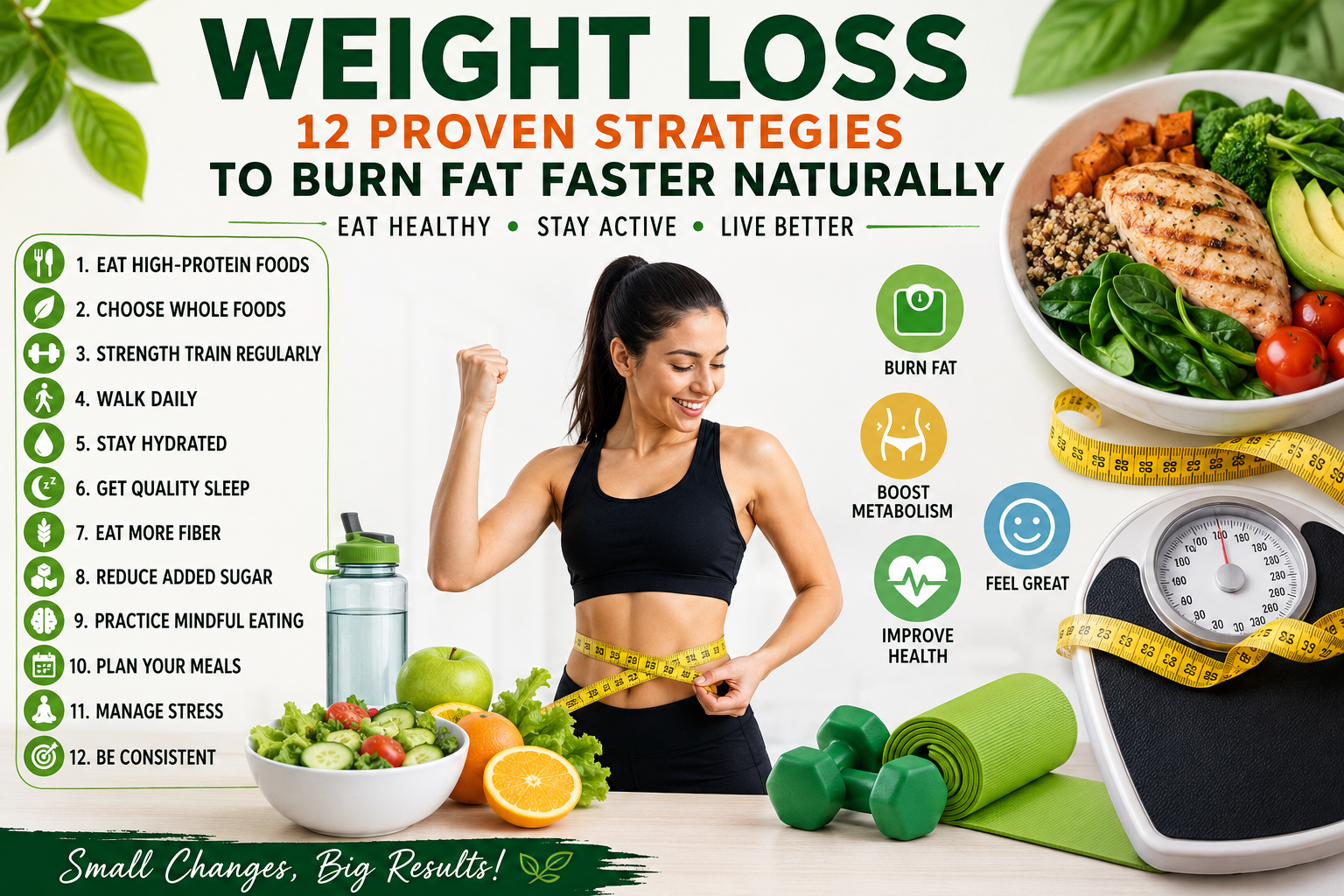
Weight Loss is one of the most popular health goals worldwide, but achieving sustainable results requires more than following fad diets or spending endless hours at the gym. The secret to successful Weight Loss lies in creating healthy habits that naturally increase fat burning while preserving muscle and improving overall wellness.
If you’re looking for safe, effective, and science-backed ways to achieve Weight Loss, this guide will help you understand the best natural strategies. These proven techniques can help improve metabolism, reduce body fat, increase energy, and promote long-term health.
Whether you’re just starting your Weight Loss journey or looking to overcome a plateau, these 12 proven strategies will help you burn fat faster naturally.
Table of Contents
Why Weight Loss Matters
Maintaining a healthy weight offers numerous benefits beyond appearance. Successful Weight Loss can:
- Reduce the risk of heart disease
- Lower blood pressure
- Improve blood sugar control
- Enhance mobility
- Increase energy levels
- Improve sleep quality
- Boost confidence
- Support mental health
- Improve longevity
Healthy Weight Loss is about improving your overall quality of life rather than chasing unrealistic body standards.
1. Weight Loss Starts with a High-Protein Diet
Protein is one of the most effective nutrients for Weight Loss because it:
- Increases satiety
- Preserves lean muscle
- Boosts metabolism
- Reduces cravings
Excellent protein sources include:
- Eggs
- Fish
- Chicken breast
- Greek yogurt
- Lentils
- Cottage cheese
- Tofu
- Beans
Aim for protein at every meal to naturally support Weight Loss.
2. Weight Loss Becomes Easier When You Eat Whole Foods
Whole foods contain more nutrients and fewer empty calories than processed foods.
Choose:
- Fresh vegetables
- Fruits
- Whole grains
- Lean proteins
- Healthy fats
- Nuts
- Seeds
Avoid excessive:
- Sugary drinks
- Candy
- Refined flour
- Processed snacks
- Fast food
Whole foods naturally support long-lasting Weight Loss by improving fullness and reducing overeating.
3. Weight Loss Improves with Regular Strength Training
Many people only focus on cardio, but strength training is equally important for Weight Loss.
Benefits include:
- Builds muscle
- Burns calories
- Increases resting metabolism
- Improves body composition
Aim for strength training at least 2–4 times each week.
4. Weight Loss Accelerates with Daily Walking
Walking is one of the simplest exercises for natural Weight Loss.
Benefits include:
- Burns calories
- Reduces stress
- Improves heart health
- Supports fat metabolism
A goal of 8,000–10,000 daily steps can significantly contribute to sustainable Weight Loss.
5. Weight Loss Requires Proper Hydration
Water plays an important role in Weight Loss by:
- Supporting metabolism
- Reducing hunger
- Improving digestion
- Enhancing workouts
Drink 2–3 liters of water daily, depending on your activity level.
6. Weight Loss Depends on Quality Sleep
Poor sleep disrupts hormones responsible for hunger and appetite.
To improve Weight Loss, aim for:
- 7–9 hours of sleep
- Consistent bedtime
- Reduced screen time before bed
- A cool, dark sleeping environment
Quality sleep allows your body to recover and regulate fat-burning hormones.
7. Weight Loss Benefits from Eating More Fiber
Fiber slows digestion and keeps you feeling full longer.
High-fiber foods include:
- Oats
- Apples
- Broccoli
- Beans
- Chia seeds
- Berries
- Brown rice
Fiber is an essential part of every successful Weight Loss plan.
8. Weight Loss Improves When You Reduce Added Sugar
Too much sugar contributes to:
- Weight gain
- Belly fat
- Insulin resistance
- Increased cravings
Replace sugary snacks with:
- Fruit
- Nuts
- Yogurt
- Dark chocolate in moderation
Reducing sugar intake naturally supports healthier Weight Loss.
9. Weight Loss Gets Better with Mindful Eating
Mindful eating helps prevent overeating.
Practice:
- Eating slowly
- Chewing thoroughly
- Avoiding distractions
- Listening to hunger signals
Mindful eating encourages long-term Weight Loss without restrictive dieting.
10. Weight Loss Is Easier with Consistent Meal Planning
Planning meals reduces unhealthy food choices.
Prepare:
- Healthy breakfasts
- Balanced lunches
- Nutritious dinners
- Healthy snacks
Meal planning makes healthy Weight Loss more achievable.
11. Weight Loss Improves with Stress Management
Stress increases cortisol, which may encourage fat storage.
Reduce stress through:
- Meditation
- Yoga
- Deep breathing
- Nature walks
- Reading
- Journaling
Managing stress supports consistent Weight Loss.
12. Weight Loss Requires Consistency, Not Perfection
The biggest secret to successful Weight Loss is consistency.
Focus on:
- Healthy habits
- Gradual progress
- Regular exercise
- Balanced nutrition
- Patience
Small improvements every day produce lasting Weight Loss results.
Common Weight Loss Mistakes
Avoid these mistakes:
- Skipping meals
- Following crash diets
- Drinking sugary beverages
- Ignoring strength training
- Sleeping too little
- Eating too many processed foods
- Unrealistic expectations
- Inconsistent exercise
Healthy Foods That Support Weight Loss
| Food | Benefit |
|---|---|
| Eggs | High protein |
| Salmon | Healthy fats |
| Oats | Fiber-rich |
| Greek yogurt | Protein and probiotics |
| Spinach | Low calorie |
| Apples | Fiber |
| Almonds | Healthy fats |
| Lentils | Plant protein |
| Avocados | Healthy fats |
| Broccoli | Nutrient-dense |
Daily Weight Loss Routine
Morning
- Drink water
- Healthy breakfast
- Walk for 20 minutes
Afternoon
- Balanced lunch
- Stay hydrated
- Light movement
Evening
- Strength training or brisk walk
- Healthy dinner
- Relax before bedtime
Night
- Avoid heavy snacks
- Sleep 7–9 hours
Summary
Successful Weight Loss is not about extreme diets or quick fixes. Instead, it comes from developing sustainable habits that improve your overall health. Eating protein-rich meals, choosing whole foods, exercising regularly, staying hydrated, sleeping well, reducing sugar, managing stress, and remaining consistent all work together to help you burn fat naturally.
Remember that healthy Weight Loss is a gradual process. Focus on long-term lifestyle changes rather than short-term restrictions, and celebrate every small milestone along the way.
Frequently Asked Questions (FAQs)
1. What is the healthiest way to achieve Weight Loss?
A combination of balanced nutrition, regular exercise, adequate sleep, hydration, and consistency is the healthiest approach.
2. How much Weight Loss is considered safe?
Losing about 0.5–1 kg (1–2 pounds) per week is generally considered safe and sustainable.
3. Which foods help with Weight Loss?
Protein-rich foods, vegetables, fruits, whole grains, legumes, and healthy fats support natural weight loss.
4. Does drinking water help with Weight Loss?
Yes. Water can reduce appetite, support metabolism, and improve digestion.
5. Is cardio enough for Weight Loss?
Cardio helps burn calories, but combining it with strength training usually produces better long-term results.
6. Can sleep affect Weight Loss?
Yes. Poor sleep can increase hunger hormones and make it harder to lose weight.
7. Should I avoid carbohydrates completely?
No. Choose healthy carbohydrates like oats, brown rice, fruits, vegetables, and whole grains instead of refined carbs.
8. How long does Weight Loss take?
Results vary, but consistent healthy habits typically produce noticeable improvements within several weeks and continue over time.