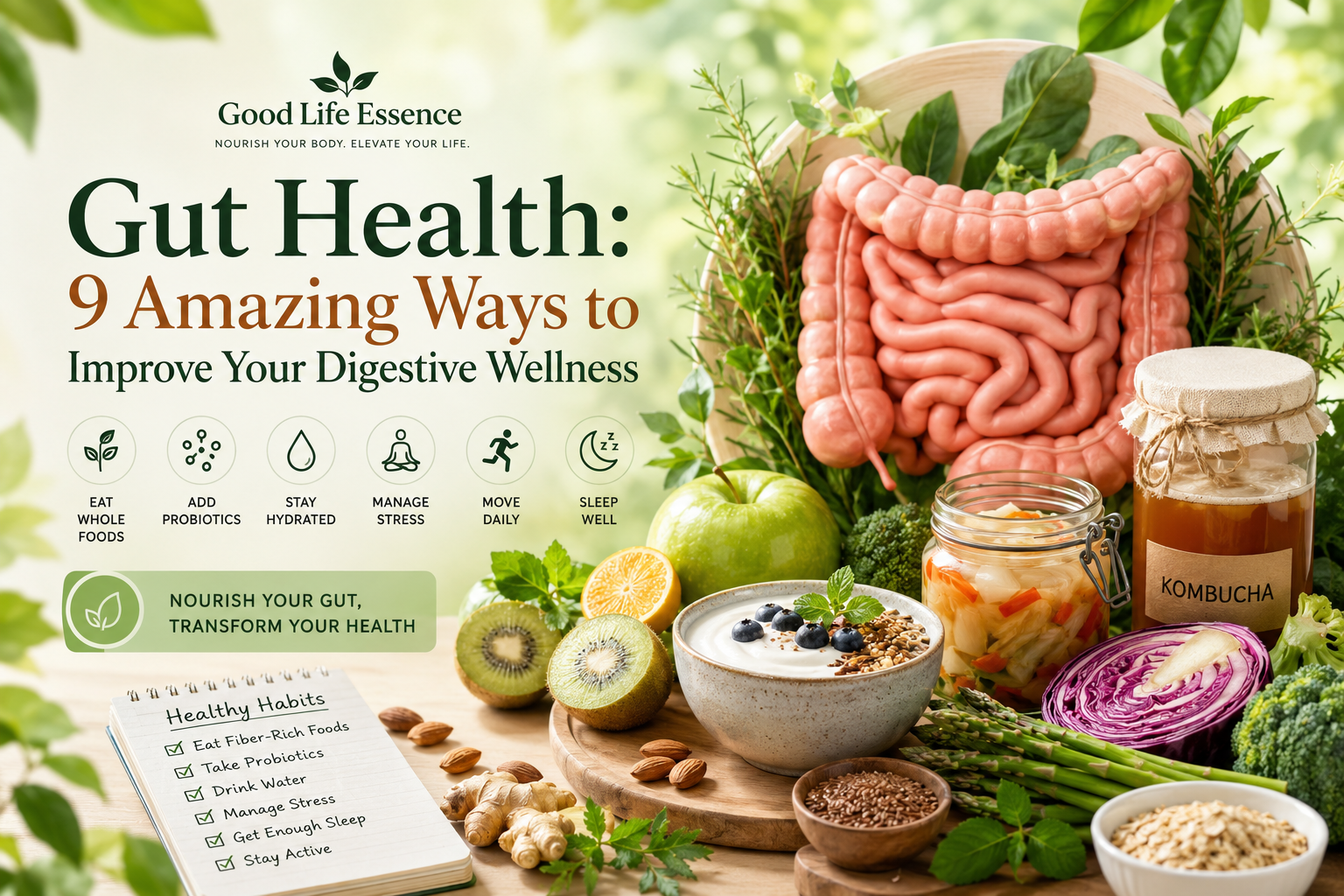
Gut Health is one of the most important foundations of overall wellness. A healthy digestive system does much more than process food. It supports your immune system and influences your mood. It improves nutrient absorption and increases energy levels. Additionally, it helps protect your body from illness. If you’ve been experiencing bloating or constipation, you may benefit from improving your Gut Health. It could also help if you feel fatigue, indigestion, or have irregular bowel movements.
Modern lifestyles filled with processed foods, stress, poor sleep, and lack of exercise can negatively affect the balance of beneficial bacteria living in your digestive tract. Fortunately, simple lifestyle changes can restore your digestive system naturally.
In this comprehensive guide, you’ll discover 9 amazing ways to improve Gut Health, enhance your digestive wellness, and build habits that support lifelong health.
Table of Contents
Why Gut Health Matters
Gut Health refers to the balance of microorganisms living inside your digestive tract. Trillions of beneficial bacteria, fungi, and other microbes make up your gut microbiome.
A balanced microbiome helps:
- Digest food efficiently
- Absorb vitamins and minerals
- Produce essential nutrients
- Strengthen immunity
- Reduce inflammation
- Support heart health
- Improve mental well-being
- Maintain healthy body weight
When your Gut Health is compromised, harmful bacteria may outnumber beneficial ones, leading to digestive discomfort and chronic health issues.
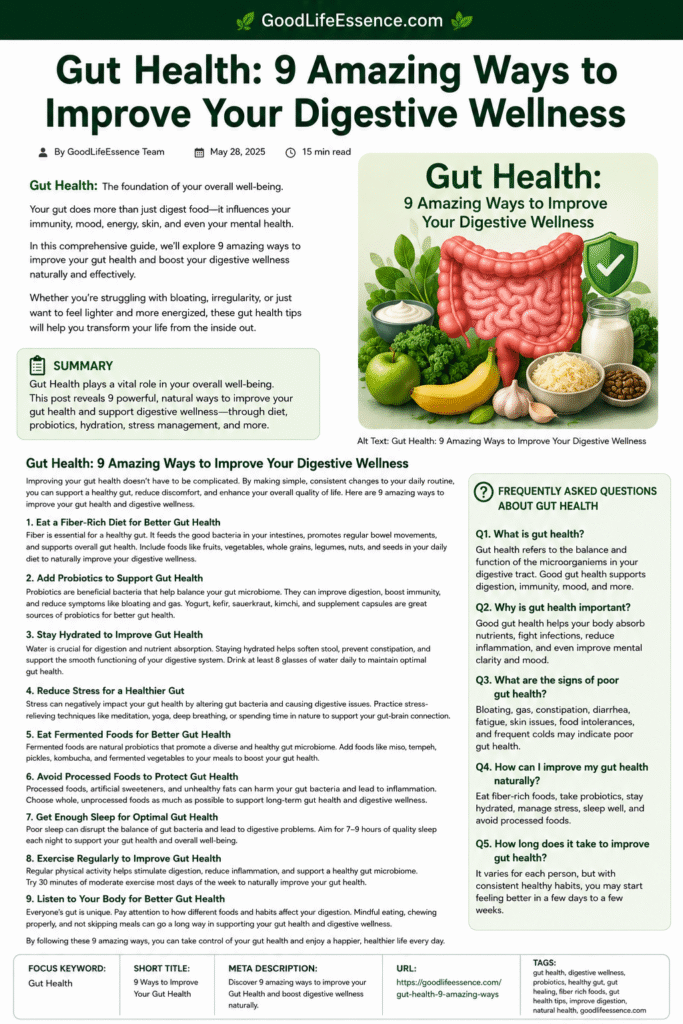
Signs of Poor Gut Health
Your body often provides warning signs when your Gut Health needs attention.
Common symptoms include:
- Frequent bloating
- Gas
- Constipation
- Diarrhea
- Acid reflux
- Food intolerances
- Fatigue
- Skin problems
- Sugar cravings
- Weak immunity
- Difficulty concentrating
- Mood changes
Improving Gut Health can help reduce many of these symptoms naturally.
1. Gut Health: Eat More Fiber Every Day
Dietary fiber is one of the most effective ways to improve Gut Health.
Fiber acts as food for beneficial gut bacteria. As these bacteria ferment fiber, they produce short-chain fatty acids that strengthen the intestinal lining and reduce inflammation.
Excellent fiber-rich foods include:
- Apples
- Pears
- Bananas
- Oats
- Brown rice
- Quinoa
- Lentils
- Chickpeas
- Black beans
- Spinach
- Broccoli
- Carrots
- Sweet potatoes
- Flaxseeds
- Chia seeds
Aim for 25–35 grams of fiber daily for better Gut Health.
Fiber also promotes regular bowel movements, improves digestion, controls blood sugar, and supports heart health.
2. Gut Health: Add Probiotic Foods to Your Diet
Probiotics are live beneficial bacteria that improve Gut Health by restoring microbial balance.
Regularly consuming probiotic-rich foods can improve digestion and strengthen immunity.
Top probiotic foods include:
- Yogurt with live cultures
- Kefir
- Kimchi
- Sauerkraut
- Miso
- Tempeh
- Kombucha
- Traditional fermented vegetables
These foods increase beneficial bacteria while reducing harmful microbes that contribute to digestive discomfort.
Adding one serving of probiotic foods daily is an easy way to support long-term Gut Health.
3. Gut Health: Feed Good Bacteria with Prebiotics
While probiotics introduce healthy bacteria, prebiotics feed those bacteria.
Prebiotic foods include:
- Garlic
- Onion
- Leeks
- Asparagus
- Chicory root
- Bananas
- Oats
- Apples
- Jerusalem artichokes
Combining probiotics and prebiotics creates a healthy digestive environment.
Experts often call this combination “synbiotic nutrition” because it maximizes Gut Health benefits.
4. Gut Health: Drink More Water Every Day
Hydration is often overlooked when discussing Gut Health.
Water helps:
- Digest food
- Absorb nutrients
- Prevent constipation
- Maintain intestinal lining
- Support beneficial bacteria
Aim for 2–3 liters of water daily, adjusting based on activity level and climate.
You can also increase hydration through:
- Herbal teas
- Water-rich fruits
- Cucumbers
- Watermelon
- Soups
Proper hydration works together with fiber to keep your digestive system functioning efficiently.
5. Gut Health: Reduce Processed Foods and Added Sugar
One of the fastest ways to improve Gut Health is reducing ultra-processed foods.
Highly processed foods often contain:
- Excess sugar
- Artificial sweeteners
- Refined carbohydrates
- Harmful additives
- Unhealthy fats
These ingredients may encourage the growth of harmful bacteria while reducing beneficial microbes.
Instead, choose whole foods such as:
- Fresh vegetables
- Fruits
- Whole grains
- Lean proteins
- Nuts
- Seeds
- Healthy fats
- Legumes
A whole-food diet naturally supports better Gut Health, higher energy, and improved digestion.
6. Gut Health: Manage Stress to Support Better Digestion
Stress has a powerful impact on Gut Health. The brain and digestive system communicate constantly through the gut-brain axis. When stress levels remain high for long periods, digestion slows, beneficial gut bacteria can become imbalanced, and digestive symptoms such as bloating, stomach pain, diarrhea, or constipation may become more frequent.
Ways to Reduce Stress for Better Gut Health
- Practice meditation for 10–15 minutes daily.
- Try deep breathing exercises.
- Spend time outdoors in nature.
- Keep a gratitude journal.
- Listen to calming music.
- Read a book before bedtime.
- Limit excessive screen time.
- Maintain a healthy work-life balance.
Lowering stress not only improves Gut Health but also supports better sleep, stronger immunity, improved mood, and healthier digestion.
7. Gut Health: Exercise Regularly for a Healthy Microbiome
Regular physical activity benefits your entire body, including your digestive system. Studies suggest that exercise increases the diversity of beneficial gut bacteria, which is an important marker of excellent Gut Health.
Best Exercises for Gut Health
- Walking
- Jogging
- Cycling
- Swimming
- Yoga
- Pilates
- Strength training
- Stretching
Aim for 150 minutes of moderate exercise each week.
Exercise also:
- Reduces constipation
- Supports healthy metabolism
- Improves circulation
- Lowers inflammation
- Enhances mood
- Helps maintain a healthy body weight
Even a 30-minute brisk walk after meals can significantly improve Gut Health over time.
8. Gut Health: Prioritize Quality Sleep
Sleep and Gut Health are closely connected. Poor sleep can disrupt the balance of your gut microbiome, while an unhealthy gut may also interfere with sleep quality.
Adults should aim for 7–9 hours of quality sleep each night.
Healthy Sleep Habits
- Go to bed at the same time every night.
- Avoid caffeine late in the day.
- Limit alcohol before bedtime.
- Keep your bedroom cool and dark.
- Reduce blue light exposure one hour before sleep.
- Avoid heavy meals just before bedtime.
Consistent sleep supports hormone regulation, digestion, immune function, and long-term Gut Health.
9. Gut Health: Avoid Unnecessary Antibiotics
Antibiotics are life-saving medications when prescribed appropriately, but unnecessary use can reduce both harmful and beneficial bacteria in your digestive tract.
To protect your Gut Health:
- Only take antibiotics when prescribed by a healthcare professional.
- Complete the prescribed course.
- Eat probiotic-rich foods after antibiotic treatment.
- Consume prebiotic foods to help beneficial bacteria recover.
- Follow a nutrient-rich diet during recovery.
Restoring Gut Health after antibiotics may take several weeks or even months, depending on the individual.
Additional Daily Habits That Improve Gut Health
Besides the nine major strategies, these healthy habits can further strengthen Gut Health:
- Eat meals at regular times.
- Chew food slowly and thoroughly.
- Avoid overeating.
- Limit excessive alcohol consumption.
- Avoid smoking.
- Spend time outdoors.
- Include colorful fruits and vegetables in every meal.
- Eat fermented foods several times a week.
- Stay physically active.
- Maintain a healthy body weight.
Small, consistent lifestyle changes often produce the greatest long-term improvements in Gut Health.
Summary
Improving Gut Health does not require expensive supplements or complicated diets. A balanced lifestyle built on nutritious foods, regular movement, hydration, stress management, and quality sleep can transform your digestive wellness.
Quick Summary Table
| Habit | Benefit for Gut Health |
|---|---|
| Eat more fiber | Feeds beneficial gut bacteria |
| Consume probiotics | Restores healthy gut microbes |
| Include prebiotics | Nourishes probiotics |
| Drink enough water | Supports digestion and bowel health |
| Reduce processed foods | Encourages beneficial bacteria |
| Manage stress | Improves the gut-brain connection |
| Exercise regularly | Increases microbiome diversity |
| Sleep 7–9 hours | Maintains healthy gut balance |
| Use antibiotics wisely | Protects beneficial bacteria |
Following these habits consistently can lead to better digestion, stronger immunity, increased energy, and improved overall well-being.
Frequently Asked Questions (FAQs)
1. What is Gut Health?
Gut Health refers to the balance of beneficial microorganisms in your digestive system that help digest food, absorb nutrients, support immunity, and maintain overall health.
2. Why is Gut Health important?
Good Gut Health improves digestion, boosts immunity, supports brain health, reduces inflammation, and helps your body absorb essential nutrients efficiently.
3. Which foods are best for Gut Health?
Some of the best foods include:
- Yogurt
- Kefir
- Kimchi
- Sauerkraut
- Oats
- Apples
- Bananas
- Garlic
- Onions
- Lentils
- Beans
- Leafy greens
4. How long does it take to improve Gut Health?
Many people notice improvements within 2–6 weeks, although building a healthy gut microbiome is an ongoing process that benefits from consistent healthy habits.
5. Can drinking water improve Gut Health?
Yes. Staying hydrated supports digestion, nutrient absorption, bowel regularity, and a healthy intestinal environment.
6. Are probiotics necessary?
Not everyone needs probiotic supplements. Many people can improve Gut Health by eating fermented foods and a balanced, fiber-rich diet.
7. Does stress affect Gut Health?
Yes. Chronic stress can disrupt digestion and alter the balance of beneficial bacteria. Stress management techniques can significantly improve Gut Health.
8. Is exercise good for Gut Health?
Absolutely. Regular physical activity supports a diverse gut microbiome and promotes healthy digestion.
9. Can poor sleep affect Gut Health?
Yes. Inadequate sleep can negatively influence the gut microbiome and digestive function. Aim for 7–9 hours of quality sleep each night.
10. What is the easiest way to improve Gut Health?
Start with simple daily habits:
- Eat more fiber.
- Drink enough water.
- Include probiotic and prebiotic foods.
- Exercise regularly.
- Sleep well.
- Manage stress.
These small changes can make a significant difference over time.
Conclusion
Gut Health is the cornerstone of a healthy body and mind. By nourishing your gut with fiber-rich foods, probiotics, prebiotics, proper hydration, regular exercise, quality sleep, and effective stress management, you can support a balanced microbiome and improve your digestive wellness naturally.
Remember that improving Gut Health is a journey, not a quick fix. Consistent healthy habits will help you enjoy better digestion, stronger immunity, increased energy, and a higher quality of life.
Start with one or two changes today, build on them over time, and your digestive system will thank you for years to come.