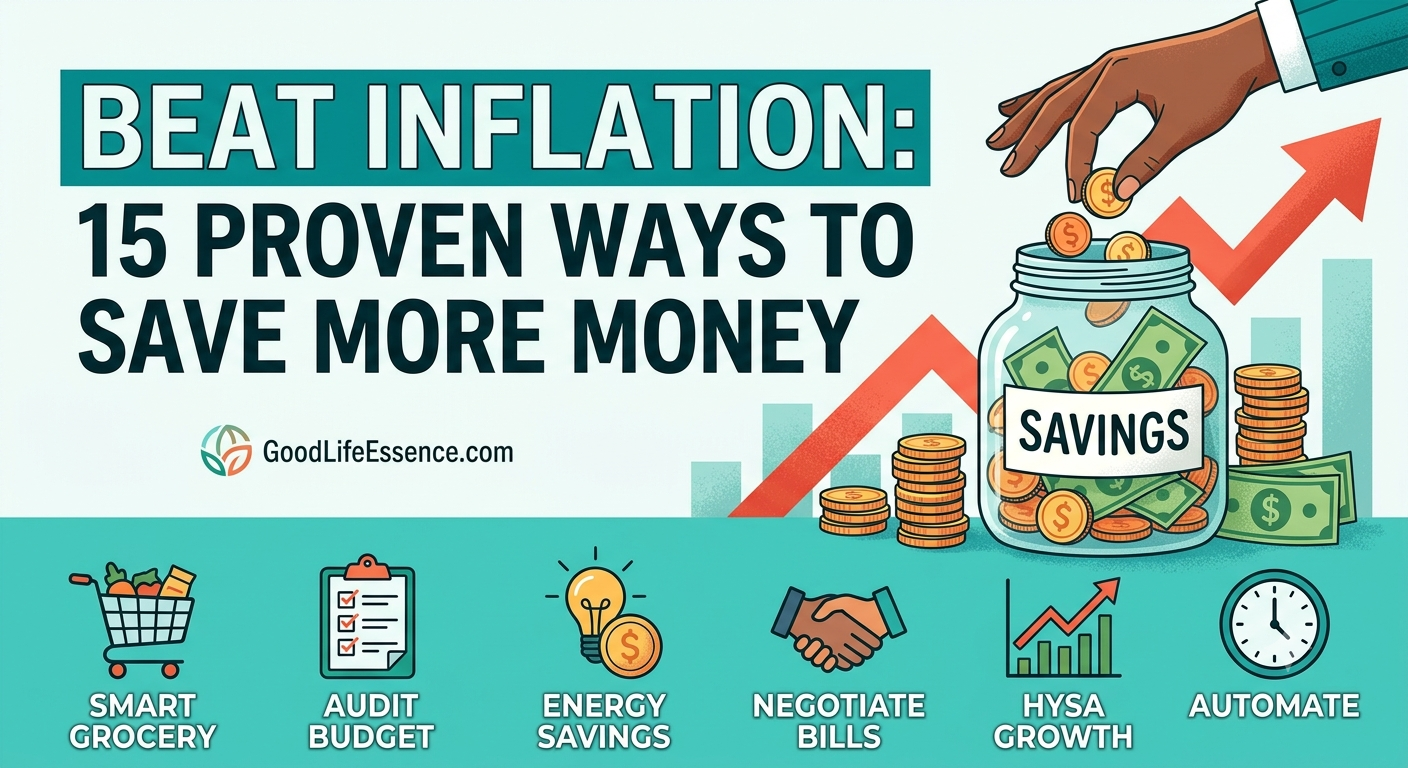
Finance Tips: 15 Proven Ways to Save More Money Despite Rising Inflation is the ultimate guide you need to protect your hard-earned cash in today’s unpredictable economy. When the cost of everything from groceries to gasoline keeps climbing, traditional budgeting methods can feel entirely inadequate. If you find your bank account draining faster than usual, you are not alone.
Maintaining financial stability requires strategy, discipline, and a willingness to adapt. To help you regain control, we have compiled an exhaustive list of actionable, real-world strategies. Here are the crucial Finance Tips: 15 Proven Ways to Save More Money Despite Rising Inflation that will help you thrive, build wealth, and keep your peace of mind intact.
Table of Contents
Why You Need These Finance Tips: 15 Proven Ways to Save More Money Despite Rising Inflation Now
Inflation acts as a hidden tax on your purchasing power. If your income stays stagnant while prices rise, you are effectively taking a pay cut every single year. That is why understanding these Finance Tips: 15 Proven Ways to Save More Money Despite Rising Inflation is no longer optional—it is a necessity for financial survival.
By implementing strategic adjustments to how you spend, save, and invest, you can counteract the eroding effects of inflation. Let’s dive deep into the 15 proven methods to bulletproof your wallet.
1. Audit and Overhaul Your Monthly Budget
You cannot fix what you do not track. The foundation of beating higher prices is a comprehensive budget audit. Sit down with your bank statements from the last three months and categorize every single dollar. Use the 50/30/20 rule as a starting framework (50% needs, 30% wants, 20% savings), but adjust it to reflect current economic realities. Identifying where your money leaks are is the first step toward reclaiming your purchasing power.
2. Embrace the “Zero-Based” Budgeting Strategy
With zero-based budgeting, every single dollar of your income is assigned a specific job before the month begins. Your income minus your expenses should equal exactly zero. This prevents mindless scrolling-and-shopping sprees and forces you to prioritize your savings and essential bills over impulse purchases.
3. Negotiate Recurring Bills and Subscriptions
Many people waste hundreds of dollars a year on “zombie” subscriptions they completely forgot about. Cancel streaming services, gym memberships, and software apps you haven’t used in the past 30 days. For essentials like car insurance, internet, and phone bills, call your providers and negotiate. Let them know you are looking for better rates elsewhere; companies frequently have unadvertised retention discounts.
4. Optimize Your Grocery Strategy with Meal Planning
Food is one of the categories hit hardest by inflation. To fight back, never walk into a grocery store without a concrete plan. Meal plan for the week based on items that are currently on sale. Lean heavily into generic store brands, which often taste identical to name brands but cost up to 30% less. Additionally, try substituting meat with affordable plant-based proteins like lentils, chickpeas, or beans a few nights a week.
5. Transition to a High-Yield Savings Account (HYSA)
If your cash is sitting in a traditional brick-and-mortar bank account, it is actively losing value to inflation due to microscopic interest rates. Move your emergency fund to a High-Yield Savings Account (HYSA). These accounts offer significantly higher interest rates, allowing your savings to grow and partially offset the rising cost of living.
6. Automate Your Savings Contributions
One of the most effective psychological hacks for saving money is taking human error out of the equation. Set up an automatic transfer from your checking account to your savings account immediately following every payday. If you never see the money sitting in your checking account, you won’t miss it, and you ensure your savings goals are met first.
7. Crush High-Interest Debt aggressively
High inflation often triggers central banks to raise interest rates, making variable-rate debts like credit cards drastically more expensive. Use the Debt Avalanche method (paying off the highest interest rate first) or the Debt Snowball method (paying off the smallest balance first) to eliminate debt. Freeing up the money going toward interest payments is an instant raise for your monthly budget.
8. Implement the 48-Hour Rule for Non-Essential Purchases
Impulse buying is the enemy of financial health. When you feel the urge to buy a non-essential item, force yourself to wait 48 hours. Use this time to reflect on whether the item is a true need or a fleeting want. More often than not, the emotional urge to buy will fade, saving you from buyer’s remorse and protecting your savings.
9. Slash Energy Costs Around the Home
Your utility bills are a prime target for optimization. Lower your thermostat by a couple of degrees in the winter and raise it in the summer. Switch your lightbulbs to energy-efficient LEDs, unplug electronics when they aren’t in use (to avoid “vampire” power draw), and ensure your home is properly insulated. These small daily changes add up to massive annual savings.
10. Prioritize Quality Over Cheapness (Value-Based Spending)
It sounds counterintuitive, but buying ultra-cheap items can actually cost you more in the long run. Buying a poorly made pair of shoes for $20 that breaks in three months means you spend $80 a year. Investing $60 in a high-quality pair that lasts three years saves you money over time. Focus on the cost-per-use rather than just the initial price tag.
11. Master the Art of DIY and Home Maintenance
Before dialing a professional for minor issues around the house or car, check if it is something you can safely fix yourself. Platforms like YouTube offer free, step-by-step tutorials for everything from repairing a leaky faucet to changing your car’s engine air filter. Taking care of small tasks yourself preserves cash for items you truly cannot handle.
12. Leverage Cash-Back Apps and Coupon Extensions
If you have to spend money, make sure you get a percentage of it back. Use browser extensions and cash-back apps to automatically find coupons and earn rewards on your everyday purchases. Just remember: only use these tools for things you were already planning to buy. Buying something you don’t need just because it’s on sale or offers cash back is still losing money.
13. Rethink Your Transportation and Commuting Habits
Fuel and vehicle maintenance can heavily burden your wallet. Combine your errands into a single trip to minimize driving distance. Look into carpooling with coworkers, utilizing public transit, or biking if you live close to work. If you own multiple vehicles, consider whether your household can downsize to a single car to eliminate duplicate insurance, registration, and maintenance fees.
14. Capitalize on Free Community Resources
Entertainment does not have to be expensive. Cancel pricy book subscriptions and utilize your local library for free access to physical books, audiobooks, movies, and community museum passes. Seek out free local events, parks, and hiking trails for weekend activities rather than spending money at expensive bars, theaters, or restaurants.
15. Diversify Income Streams with a Side Hustle
When cutting expenses reaches its absolute limit, the only way to save more is to earn more. Consider turning a hobby or skill into a secondary income source. Whether it’s freelance writing, tutoring, pet sitting, or selling handmade goods online, an extra income stream provides a powerful cushion that shields your primary budget from the effects of inflation.
Implementing Finance Tips: 15 Proven Ways to Save More Money Despite Rising Inflation Long-Term
Consistency is the absolute secret weapon when dealing with economic shifts. Applying these Finance Tips: 15 Proven Ways to Save More Money Despite Rising Inflation shouldn’t be treated as a temporary restriction, but rather as a lifestyle shift toward intentional living. When you master where your money goes, you create a life of abundance and security that external market forces cannot destroy. Take it one step at a time, track your progress, and celebrate the small financial victories along the way.
Summary
Navigating a high-inflation environment requires moving away from passive spending and embracing active financial management. By auditing your current budget, ruthlessly eliminating unnecessary expenses, leveraging high-yield financial accounts, and finding creative ways to optimize everyday spending on food and energy, you can effectively counteract rising prices. Combined with earning extra income and automating your savings habits, these foundational habits ensure your long-term financial security remains firmly within your control.
Frequently Asked Questions
What is the single most effective way to start saving money during high inflation?
The most effective starting point is conducting a comprehensive audit of your expenses and moving your savings into a High-Yield Savings Account (HYSA). Knowing exactly where your money goes eliminates waste, while an HYSA ensures your saved cash earns a competitive interest rate to combat inflation.
How does inflation specifically impact my personal savings?
Inflation lowers the purchasing power of your money over time. If inflation is at 5% and your traditional bank account only pays 0.01% interest, your money is effectively losing value because goods and services are rising in price much faster than your money is growing.
Should I stop investing while inflation is high to save more cash?
Generally, no. While maintaining an emergency fund in cash is vital, investing in assets like stocks or real estate historically acts as an excellent long-term hedge against inflation. Pausing your investments entirely can cause you to miss out on compounding growth.
Is it worth negotiating bills if the savings seem small?
Absolutely. Saving $15 a month on an internet bill, $20 on insurance, and $10 on a streaming service might seem small individually, but together they save you $540 a year. Small, consistent financial adjustments compound into substantial long-term relief.