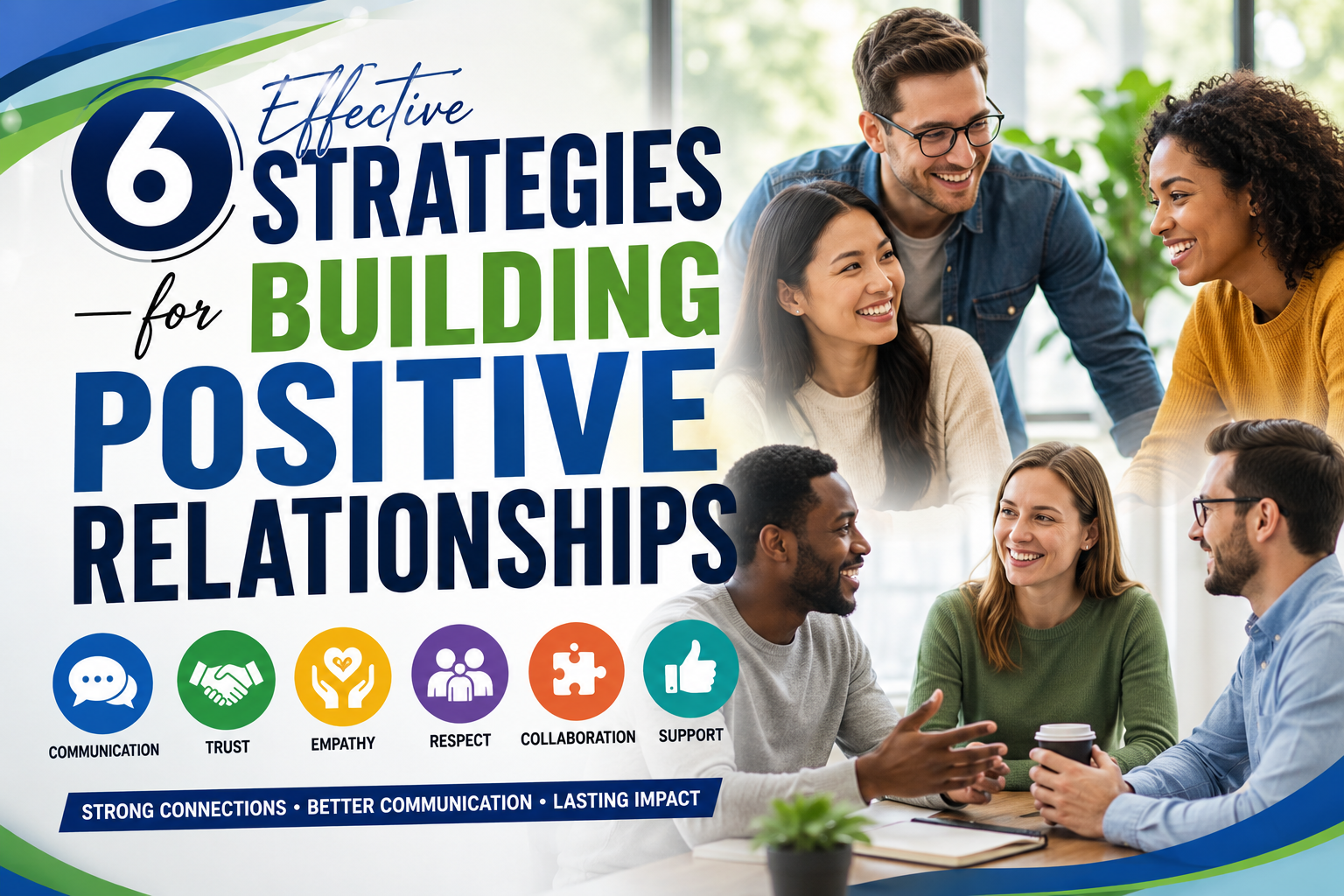
6 Effective Strategies for Building Positive Relationships
Building Positive Relationships
Building Positive Relationships is one of the most valuable skills anyone can develop. Whether in your family, workplace, friendships, or community, Building Positive Relationships creates trust, improves communication, reduces conflict, and increases happiness. People who focus on Building Positive Relationships often experience better mental health, greater career success, and stronger emotional support during life’s challenges.
Strong relationships don’t happen by chance—they require intentional effort, mutual respect, patience, and consistency. Fortunately, anyone can improve their relationship skills with practical habits and the right mindset.
In this guide, you’ll discover 6 Effective Strategies for Building Positive Relationships that can help you create meaningful and lasting connections.
Why Building Positive Relationships Matters
Building Positive Relationships positively impacts nearly every area of life. Healthy relationships provide emotional security, encourage personal growth, and improve overall well-being.
Table of Contents
Benefits include:
- Greater trust and loyalty
- Improved communication
- Better teamwork
- Reduced stress
- Increased happiness
- Strong emotional support
- Better conflict resolution
- Improved career opportunities
- Higher self-confidence
- Long-lasting friendships
Investing time in Building Positive Relationships is one of the smartest investments you can make.
1. Building Positive Relationships Through Honest Communication
Communication is the foundation of every successful relationship.
People appreciate honesty delivered with kindness and respect. Open communication reduces misunderstandings and builds trust over time.
Tips for Better Communication
- Listen without interrupting.
- Speak honestly but respectfully.
- Ask thoughtful questions.
- Clarify misunderstandings early.
- Avoid assumptions.
- Express appreciation regularly.
Practice Active Listening
Active listening means focusing completely on the other person instead of preparing your response.
Good listeners:
- Maintain eye contact
- Show empathy
- Avoid distractions
- Ask follow-up questions
- Summarize what they heard
This simple habit significantly improves Building Positive Relationships.
2. Building Positive Relationships by Developing Trust
Trust is earned through consistent actions rather than words.
People naturally build stronger connections with those who are dependable, honest, and respectful.
Ways to Build Trust
- Keep promises.
- Be reliable.
- Admit mistakes.
- Respect confidentiality.
- Stay consistent.
- Show integrity.
Trust takes time to build but only moments to lose. Every positive interaction strengthens Building Positive Relationships.
3. Building Positive Relationships with Empathy and Understanding
Empathy is the ability to understand another person’s feelings and perspectives.
When people feel understood, relationships become stronger and more meaningful.
Ways to Show Empathy
- Listen without judging.
- Validate emotions.
- Offer encouragement.
- Be patient.
- Respect different viewpoints.
- Avoid criticism during emotional moments.
Empathy creates emotional safety, making Building Positive Relationships much easier.
Emotional Intelligence Matters
Emotionally intelligent people:
- Recognize their emotions
- Manage reactions
- Understand others
- Resolve conflicts calmly
- Build stronger social connections
Improving emotional intelligence improves every relationship.
4. Building Positive Relationships Through Mutual Respect
Respect is essential for healthy relationships.
Respect means valuing another person’s opinions, time, boundaries, and individuality.
Ways to Show Respect
- Be punctual.
- Avoid interrupting.
- Respect boundaries.
- Appreciate differences.
- Be polite.
- Encourage others.
Mutual respect creates stronger friendships, healthier marriages, better workplaces, and happier communities.
Without respect, Building Positive Relationships becomes extremely difficult.
5. Building Positive Relationships by Resolving Conflicts Positively
Disagreements are normal.
Healthy relationships are not free from conflict—they simply manage conflict well.
Conflict Resolution Tips
- Stay calm.
- Focus on the issue.
- Avoid personal attacks.
- Listen carefully.
- Find common ground.
- Apologize when appropriate.
- Work toward solutions.
Avoid:
- Blaming
- Shouting
- Bringing up old mistakes
- Making assumptions
- Holding grudges
Learning healthy conflict resolution strengthens Building Positive Relationships over the long term.
6. Building Positive Relationships Through Appreciation and Support
Everyone wants to feel valued.
Simple acts of appreciation strengthen emotional bonds and increase relationship satisfaction.
Ways to Show Appreciation
- Say thank you.
- Celebrate achievements.
- Offer encouragement.
- Give compliments.
- Support difficult times.
- Spend quality time together.
Small gestures often create the biggest impact.
Be Consistent
Relationship success comes from consistent daily actions rather than occasional grand gestures.
Daily habits include:
- Sending encouraging messages
- Asking how someone is doing
- Remembering important dates
- Offering help
- Showing kindness
Consistency is one of the greatest Strategies for Building Positive Relationships.
Common Mistakes That Hurt Positive Relationships
Avoid these habits:
- Poor communication
- Dishonesty
- Selfish behavior
- Lack of empathy
- Constant criticism
- Ignoring boundaries
- Holding grudges
- Broken promises
- Negative attitude
- Lack of appreciation
Recognizing these behaviors helps improve Building Positive Relationships.
Daily Habits That Strengthen Building Positive Relationships
Healthy relationships are built through everyday actions.
Develop habits like:
- Smile often.
- Listen carefully.
- Encourage others.
- Respect differences.
- Show gratitude.
- Keep commitments.
- Practice patience.
- Offer help.
- Be trustworthy.
- Stay positive.
These simple routines create stronger connections over time.
Building Positive Relationships at Work
Professional relationships are equally important.
Improve workplace relationships by:
- Collaborating effectively
- Respecting deadlines
- Supporting coworkers
- Communicating clearly
- Giving constructive feedback
- Appreciating team members
- Solving problems professionally
Strong workplace relationships improve productivity and job satisfaction.
Building Positive Relationships in Families
Families thrive when communication and trust remain strong.
Family relationship tips:
- Eat meals together.
- Spend quality time.
- Resolve disagreements respectfully.
- Encourage open conversations.
- Celebrate milestones.
- Support each other’s goals.
Strong families begin with intentional Building Positive Relationships.
Building Positive Relationships with Friends
Lasting friendships require:
- Honesty
- Loyalty
- Respect
- Shared experiences
- Encouragement
- Forgiveness
Great friendships grow stronger through consistent care and mutual understanding.
Long-Term Benefits of Building Positive Relationships
People who prioritize Building Positive Relationships often enjoy:
- Better mental health
- Lower stress levels
- Greater happiness
- Improved confidence
- Better teamwork
- Stronger family bonds
- Career growth
- Increased resilience
- Higher life satisfaction
- Meaningful social connections
Healthy relationships enrich every stage of life.
Summary
Building Positive Relationships is a lifelong journey that requires communication, trust, empathy, respect, appreciation, and healthy conflict resolution. By applying these Effective Strategies, you can create stronger personal and professional relationships that bring greater happiness, emotional support, and long-term success. Remember that even small daily acts of kindness, honesty, and understanding can transform the quality of your relationships over time.
Frequently Asked Questions (FAQs)
1. What is Building Positive Relationships?
Building Positive Relationships means creating healthy, respectful, supportive, and trusting connections with others through effective communication, empathy, and mutual understanding.
2. Why is Building Positive Relationships important?
It improves emotional well-being, reduces stress, strengthens trust, enhances teamwork, and leads to happier personal and professional lives.
3. What is the most important strategy for Building Positive Relationships?
Honest communication is often the foundation because it builds trust, prevents misunderstandings, and strengthens emotional connections.
4. How can I improve my communication skills?
Practice active listening, speak respectfully, ask thoughtful questions, and be open and honest in your conversations.
5. How does empathy help in Building Positive Relationships?
Empathy helps people feel understood and valued, making it easier to build trust and resolve conflicts peacefully.
6. Can positive relationships improve mental health?
Yes. Healthy relationships provide emotional support, reduce loneliness, increase happiness, and contribute to better overall mental health.
7. How can I build trust in relationships?
Keep promises, be honest, respect confidentiality, remain dependable, and consistently follow through on your commitments.
8. What daily habits strengthen positive relationships?
Showing gratitude, listening actively, respecting boundaries, encouraging others, spending quality time together, and offering support are excellent daily habits.
Image Prompt
Prompt:
A warm and inspiring scene showing diverse people building positive relationships through teamwork, active communication, trust, empathy, collaboration, and mutual respect in a modern office and community setting. Bright natural lighting, genuine smiles, professional yet friendly atmosphere, realistic photography, ultra-high resolution, vibrant colors, inspirational, magazine-quality.
Image Alt Text:
Building Positive Relationships
Image Title:
Building Positive Relationships: 6 Effective Strategies
Image Caption:
Building Positive Relationships begins with trust, communication, empathy, and mutual respect.
Image Description:
A professional, high-quality image illustrating people communicating openly, supporting one another, and collaborating effectively to demonstrate the key principles of building positive relationships.